Quick Facts
- Organization Name
- bharatvidya.in by Bhandarkar Oriental Research Institute (भारतविद्या)
- Founded
- Parent Organization
- Bhandarkar Oriental Research Institute (BORI) (est. 1917)
- Structure
- A joint venture of BORI and Matra Media
- Location
- Pune, Maharashtra, India
- Learners
- 37,000+ across 45 countries
- Courses
- 24 courses on Indian Knowledge Systems
- Contact
- bharatvidya.in@gmail.com | +91-9545117239
- Official Website
- www.bharatvidya.in
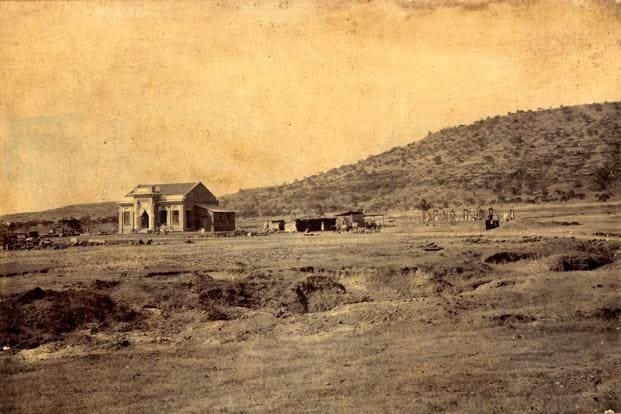
The First Institute of Its Kind
In 1917, a group of Indian scholars did something unprecedented: they established an institute dedicated to studying India's own history and heritage—by Indians, for the world.
The Bhandarkar Oriental Research Institute (BORI), named after the legendary Indologist Sir Ramakrishna Gopal Bhandarkar, became one of the earliest Indian-led institutions dedicated to rigorous research on India's past.
This founding vision—rigorous scholarship rooted in primary sources—continues to guide everything we do at BharatVidya today.
The Journey
Sir Bhandarkar's collection of 2,700 books and 17,000 manuscripts seeded BORI's library—an origin that has grown substantially over time. Learn more on Wikipedia.
A 48-year monumental project studying 1,200 manuscripts produced 19 volumes—one of the most influential critical editions of the epic. Read about the Critical Edition.
Bharatratna P.V. Kane's magnum opus—five volumes spanning 6,500 pages—became a major reference on Indian legal and social traditions.
First steps toward digitization. Over the next decade: books digitized, a digital library launched, and manuscripts preserved. Visit the digital library.
"Introduction to Indian Heritage" launched during the pandemic—marking BORI's transition from a research institution to a public educator at scale.
A joint venture of BORI and Matra Media created BharatVidya—bridging scholarship and public learning.
A Living Treasury
From 17,000 manuscripts and 2,700 books in 1917, BORI's collection has grown into one of the world's significant repositories of primary sources on Indian civilization.
Manuscripts
10th to 19th century
Rare Books
Oldest from 1820
Publications
Original research
Annals Volumes
Peer-reviewed scholarship
UNESCO Memory of the World
BORI is associated with preservation of materials recognized under the UNESCO Memory of the World programme.
Landmark Scholarship
Critical Edition of Mahabharata
The definitive scholarly text of the world's longest epic, reconstructed from manuscripts across India. This work established a global standard for critical text editing.
History of Dharmashastra
P.V. Kane's encyclopedic work on ancient Indian law, customs, and social institutions—one of the most comprehensive references on dharma literature.
P.K. Gode's Research
Pioneering studies tracing the history of everyday life in India—from betel-chewing to gunpowder, glass-making to textiles. Scholarship that connects texts to lived experience.
The Digital Transformation
In 2014, BORI took its first steps toward digitization. What began as a preservation effort has grown into a comprehensive digital ecosystem.
2020
First Online Course: Introduction to Indian Heritage
When the world paused, BORI pivoted. What began as an experiment in online education became the foundation for BharatVidya.
21 September 2022
BharatVidya.in Launches
A joint venture of BORI and Matra Media
Bridging Expertise and Curiosity
For many common people, It is difficult to find resources on Indian history that meet three critical criteria. BharatVidya was created to solve this problem.
Three Gaps We Bridge
Primary Sources: Most content on Indian heritage is derivative. Our courses are built directly on original texts, manuscripts, and archaeological evidence.
Structured Learning: Information exists, but not in pedagogically sound formats. We offer curated curricula designed for actual comprehension.
Global Accessibility: Expertise was locked in institutions. Now, anyone, anywhere can learn from scholars who have spent decades with these texts.
BharatVidya Today
NEP-Aligned Content
All courses are designed for adoption under the National Education Policy framework—eligible for Indian Knowledge Systems (IKS) and open electives credit at partner institutions.
Institutional Collaborations
We have delivered NEP-aligned IKS academic credits to over 12,000 students across India.

.png)


Begin Your Journey
Explore courses on Vedas, Mahabharata, Sanskrit, Indian philosophy, and more—taught by scholars, built on primary sources.
Explore Courses