
Artha & Niti
Ancient Indian Principles on Economics and Strategy
A comprehensive exploration of Artha (encompassing economics, wealth, governance) and Niti (ethics, strategy, social order, and practical wisdom) across India's foundational textual traditions.
₹2,500
One-time · Lifetime access
- 24Hours of Content
- 24Video Lectures
- 300Pages' Study Material
- 15+Primary Texts
- 7Distinguished Faculty
About This Course
Artha: The Framework of Wealth, Governance & Economic Strategy
In the Bharateeya intellectual tradition, Artha is not reducible to wealth or economics. It encompasses the entire domain of material welfare, political order, strategic thinking, ethical responsibility, and the practical wisdom necessary for individual and collective flourishing.
This course traces how the concept of Artha evolved and was articulated across India's diverse textual traditions — from the metaphysical foundations in the Vedas, through the ethical dilemmas of the Ramayana and Mahabharata, to the systematic treatises of Kautilya's Arthashastra and various Niti-shastra texts.
The two terms - Artha and Niti - encompass the vast domains of governance, ethics, management, wealth, strategy, social order, responsibility, and practical wisdom.
Each module offers clear explanations and contextual examples, enabling learners to understand Artha both as a philosophical ideal and as a practical guide for ethical living, decision-making, and leadership. The course also explores how narrative traditions — the Panchatantra, Brihatkatha-manjari, Jataka tales, and works from Jain and Buddhist literature — conveyed applied wisdom to generations of practitioners.
Whether you seek to understand ancient Indian political thought, explore the ethical foundations of wealth, or apply classical principles to modern leadership challenges, this course provides a rigorous yet accessible pathway into one of humanity's most sophisticated traditions of practical philosophy.
What You Will Learn
- Understand Artha and Niti as a holistic pursuit involving order, responsibility, ethics, and strategic action
- Trace the evolution of the concepts across Vedic, Epic, Puranic, Niti-shastra, and classical literary traditions
- Explain key ideas on governance, management, strategy, and practical wisdom from major Niti and Arthashastra texts
- Interpret how narratives like the Ramayana, Mahabharata, Panchatantra, and Jain-Buddhist works convey applied Artha
- Recognize the interrelationship of Dharma–Artha–Kama in shaping individual and social life
- Apply classical principles of Artha to modern leadership, ethics, and decision-making
Course Content
Curriculum
24 lectures · 24 hours · 6 modules
01
Vedic & Epic Foundations
Vedic & Epic Foundations
- The Concept of Artha in Vedic LiteratureDr. Mugdha Gadgil
- The Concept of Artha in Valmiki Ramayana – Part 1Dr. Prasad Bhide
- The Concept of Artha in Valmiki Ramayana – Part 2Dr. Prasad Bhide
- The Concept of Artha in the MahabharataProf. Pradeep Apte
- The Concept of Artha in Gita LiteratureMr. Pranav Gokhale
02
Puranic & Smriti Literature
Puranic & Smriti Literature
- The Concept of Artha in Puranic Literature – Part 1Mr. Pranav Gokhale
- The Concept of Artha in Puranic Literature – Part 2Mr. Pranav Gokhale
- The Concept of Artha in Smriti LiteratureDr. Mugdha Gadgil
03
Niti-shastra Traditions
Niti-shastra Traditions
- The Concept of Artha-Niti: Shukra-nitiDr. Manish Walvekar
- The Concept of Artha-Niti: Kamandaka-nitisaraDr. Manish Walvekar
04
Kautilya's Arthashastra
Kautilya's Arthashastra
- The Concept of Artha in Kautilya's Arthashastra – Part 1Dr. Manish Walvekar
- The Concept of Artha in Kautilya's Arthashastra – Part 2Dr. Manish Walvekar
- The Concept of Artha in Kautilya's Arthashastra – Part 3Dr. Manish Walvekar
- The Concept of Artha in Kautilya's Arthashastra – Part 4Dr. Manish Walvekar
- The Concept of Artha in Kautilya's Arthashastra – Part 5Dr. Manish Walvekar
- The Concept of Artha in Kautilya's Arthashastra – Part 6Dr. Manish Walvekar
05
Narrative Traditions
Narrative Traditions
- The Concept of Artha in Brihatkatha-manjariDr. Manish Walvekar
- The Concept of Artha in the Panchatantra – Part 1Dr. Manish Walvekar
- The Concept of Artha in the Panchatantra – Part 2Dr. Manish Walvekar
- The Concept of Artha in Vatsyayana's KamasutraDr. Manish Walvekar
06
Jain, Buddhist & Jataka Traditions
Jain, Buddhist & Jataka Traditions
- The Concept of Artha in Jain Literature – Part 1Mr. Rajas Vaishampayan
- The Concept of Artha in Jain Literature – Part 2Mr. Rajas Vaishampayan
- The Concept of Artha in Buddhist LiteratureMr. Rajas Vaishampayan
- The Concept of Artha in Jataka TalesDr. Manish Walvekar
Distinguished Scholars
Faculty
Dr. Gauri MogheCourse Design and Curation
- Dr. Mugdha Gadgil
- Dr. Prasad Bhide
- Prof. Pradeep Apte
- Mr. Pranav Gokhale
- Dr. Manish Walvekar
- Mr. Rajas Vaishampayan
A Note of Gratitude
Supported by the Vasant Kothari Family Foundation
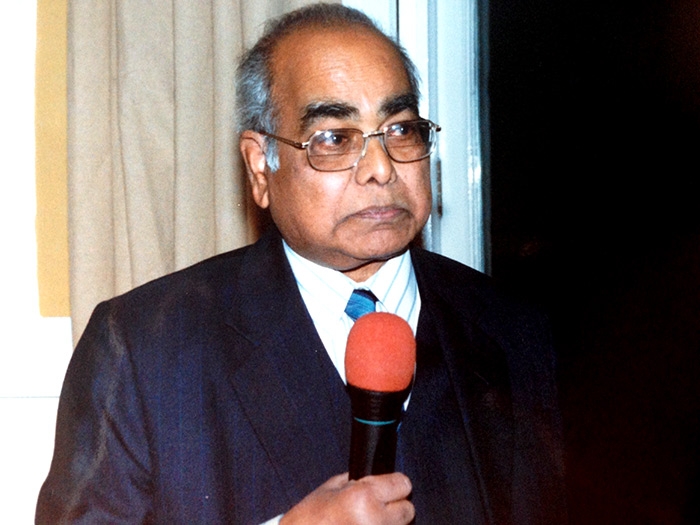
Late Shree Vasant Kothari
The Bhandarkar Oriental Research Institute expresses heartfelt gratitude to Shri Rajendra Kothari for his keen interest in bringing the study of Dharmashastra and its timeless reflections on Artha and Niti to a wider public.
This course is generously supported by the Vasant Kothari Family Foundation, in memory of Late Shri Vasant Kothari — a distinguished Sanskrit scholar, pioneering Indian lawyer in London, and a devoted ambassador of Indian culture who nurtured Vedic studies and Sanskrit scholarship in both India and the UK.
Trusted by Learners Worldwide
- 40,000+Learners enrolled
- 45+Countries
- 109Years of BORI scholarship
- 28Courses
Questions Answered
Common Questions
What is Artha, and why is it more than just "wealth" or "economics"?
In the Bharateeya tradition, Artha is one of the four Purusharthas (aims of human life), alongside Dharma, Kama, and Moksha. While often translated as "wealth" or "material prosperity," this rendering captures only a fragment of its meaning.
Artha encompasses the entire domain of material welfare, political order, governance, strategic thinking, economic policy, social organization, and the practical wisdom necessary for both individual and collective flourishing. The Arthashastra itself defines Artha as "the sustenance of mankind" — a far broader conception than mere accumulation of riches.
This course explores Artha in its full scope: as the science of acquiring resources ethically, administering them wisely, protecting what is acquired, and distributing prosperity for the welfare of all.
How does this course differ from modern economics or MBA programs?
Modern economics and management education typically focus on market mechanisms, profit maximization, and organizational efficiency. This course offers something fundamentally different: a study of how ancient Indian thinkers integrated material prosperity with ethical responsibility, social welfare, and spiritual development.
Rather than treating economics as an isolated discipline, the classical Indian approach embedded Artha within a comprehensive worldview where governance, ethics, and prosperity were inseparable. You'll encounter sophisticated discussions of taxation, treasury management, foreign policy, and administration — but always within frameworks that ask: "What serves the welfare of all beings?"
This course is not a substitute for professional business education, but a complementary exploration of how civilizational wisdom can inform contemporary leadership and decision-making.
How does this course relate to the History of Dharmashastra tradition?
The Bhandarkar Oriental Research Institute has a distinguished legacy in Dharmashastra studies, most notably through Mahamahopadhyaya P.V. Kane's monumental five-volume History of Dharmashastra — a 6,500-page encyclopedic work that remains the definitive reference on Hindu law, custom, and governance.
This course on Artha-Niti extends that scholarly tradition by focusing specifically on the political, economic, and strategic dimensions that Kane documented across his volumes on Rajadharma (duties of kings), Vyavahara (legal procedure), and the various Smritis. While Kane's work provides the comprehensive textual foundation, this course makes those insights accessible through structured video lectures by contemporary BORI scholars.
Learners interested in deeper study will find this course an excellent gateway to Kane's magisterial work and the broader Dharmashastra literature housed at BORI.
Do I need to know Sanskrit to benefit from this course?
No prior Sanskrit knowledge is required. All lectures are delivered in English, and faculty provide clear explanations of Sanskrit terminology, concepts, and textual references as they arise. Key terms are explained in context, and you'll naturally develop familiarity with important vocabulary as you progress through the modules.
That said, learners with some Sanskrit background will appreciate the faculty's references to original texts and nuanced discussions of terminology. The course is designed to be accessible to beginners while offering depth for those with existing knowledge of Indian classical languages and literature.
Why does Kautilya's Arthashastra receive six dedicated lectures?
Kautilya's Arthashastra is arguably the most comprehensive treatise on statecraft and governance produced in the ancient world. Composed around the 4th century BCE, this text of approximately 6,000 shlokas (verses) covers an astonishing range of topics: state administration, treasury management, law and justice, foreign policy, military strategy, espionage, and the duties of kings.
Six lectures allow Dr. Manish Walvekar to systematically explore the text's major themes: the training and conduct of rulers, the machinery of government, economic policy and taxation, diplomacy and the theory of the Mandala (circle of states), and the famous discussion of the four Upayas (means of policy) — Sama, Dana, Bheda, and Danda.
This extended treatment ensures learners gain substantive understanding of a text that continues to influence discussions of political realism, strategic studies, and governance philosophy worldwide.
How can ancient texts on governance apply to modern leadership challenges?
The fundamental challenges of leadership — balancing competing interests, maintaining legitimacy, making decisions under uncertainty, building institutions, managing resources ethically — remain remarkably constant across millennia. What changes are the specific contexts and technologies, not the underlying human dynamics.
The classical Indian texts offer sophisticated frameworks for thinking about these perennial challenges: How should a leader balance pragmatism with principle? When is compromise appropriate, and when is firmness required? How does one build trust while remaining strategically astute? What responsibilities accompany the accumulation of power and resources?
This course does not offer simplistic "ancient wisdom for modern success" formulas. Instead, it provides rigorous engagement with how India's greatest thinkers approached questions that remain relevant today — allowing you to develop your own applications to contemporary contexts.
What is the structure of assessments in this course?
The course includes topic-wise multiple-choice questions (MCQs) designed to reinforce learning and test conceptual clarity after each major section. These assessments help you consolidate understanding of key ideas, textual references, and the relationships between different traditions covered in the lectures.
Upon successful completion of all modules and assessments, you will receive a certificate of completion from BharatVidya, issued in partnership with the Bhandarkar Oriental Research Institute.
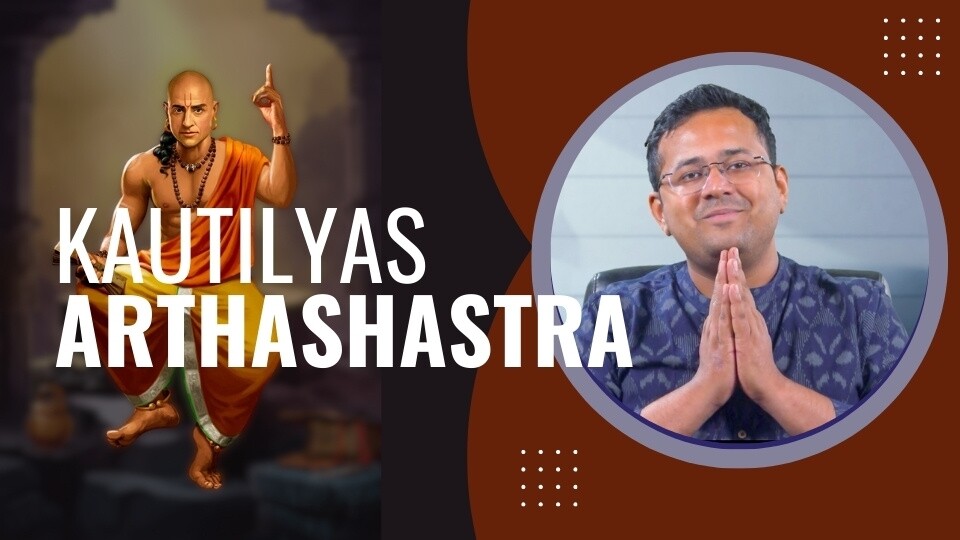
Kautilya's Arthashastra
Study the Arthashastra's framework of governance, diplomacy, warfare, and economics. Kautilya's treatise explored through structure, key concepts, and historical context.
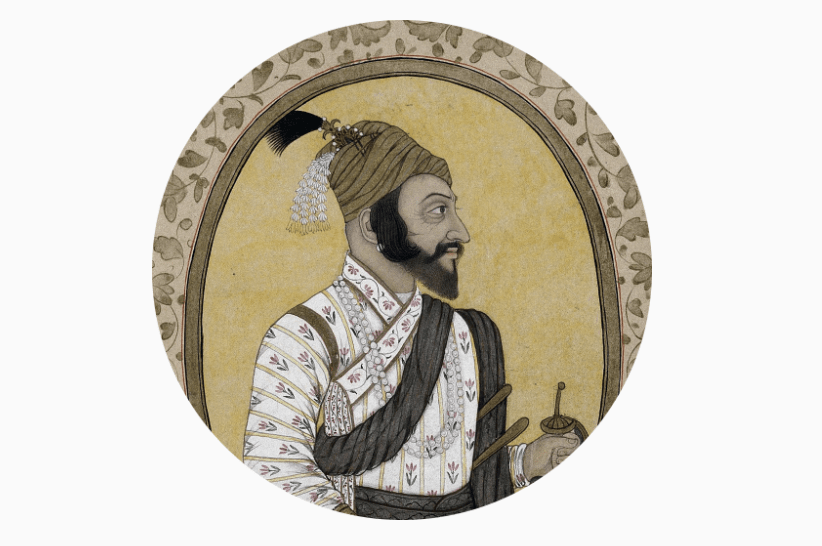
छत्रपती शिवाजी महाराजांची राजनीती
Study Chh. Shivaji Maharaj's administration, strategy, forts, navy & leadership. Marathi lectures with English sub.

Hindu Dharmashastra
Six BORI scholars teach what Dharma means, how it was codified, and why it governed every domain of Indian life. Based on P.V. Kane's History of Dharmashastra.
Begin Your Study of Artha-Niti
Join thousands of learners exploring India's foundational traditions of governance, ethics, and practical wisdom through BORI's distinguished scholarship.
₹2,500
Enroll Now24 hours · 24 lectures · Lifetime access · Certificate of completion
By clicking on Continue, I accept the Terms & Conditions,
Privacy Policy