वेतालपञ्चविंशतिः
Vikrama and Vetala18 Tales of Wisdom and Morals
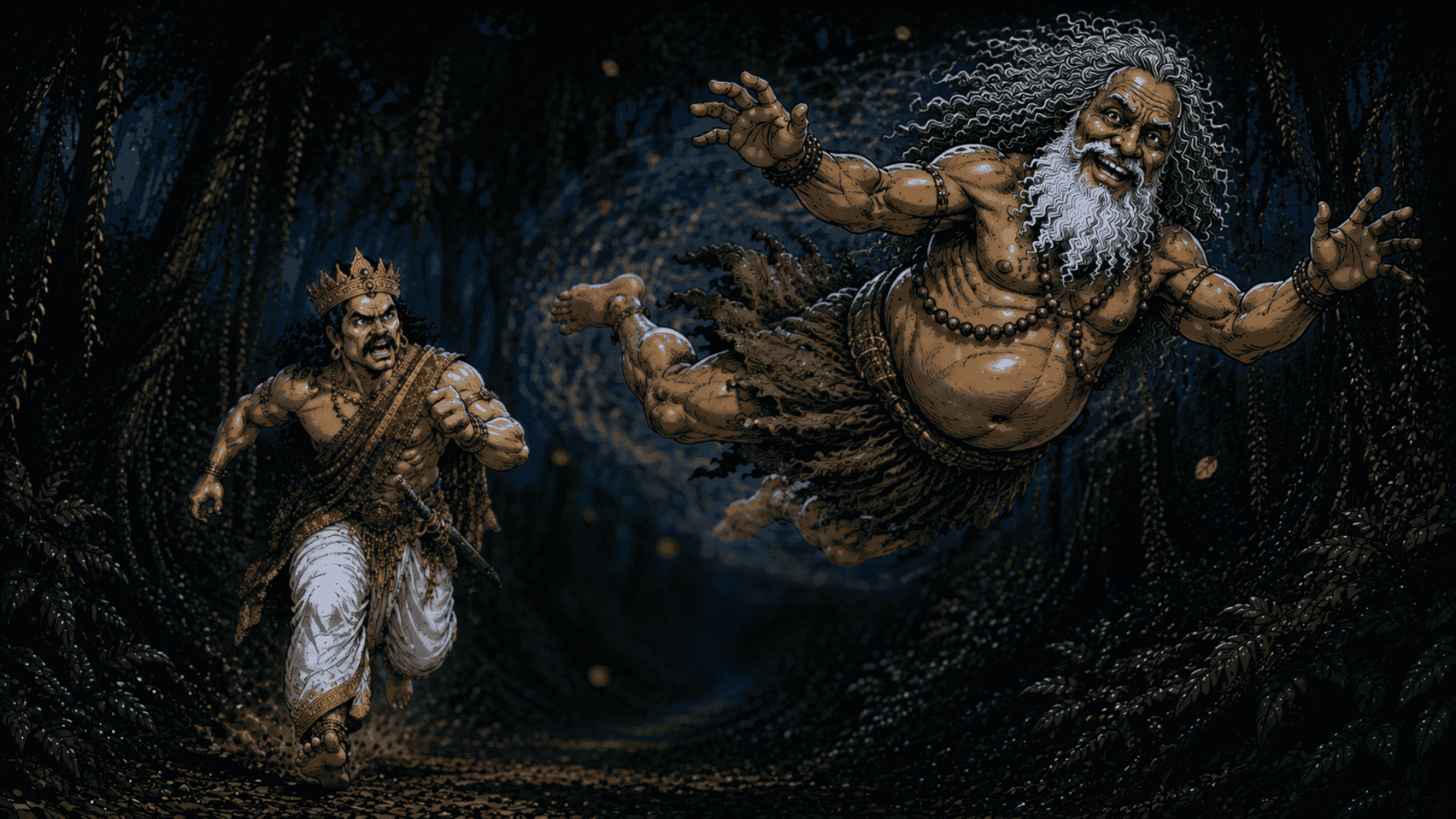
A king carries a ghost through the night. The ghost tells him a story, then asks a question he is not allowed to refuse.
₹1,000
One-time payment
- 18Stories
- 4.5Hours
- 8 to 12Age group
- EnglishLanguage
- CertificateIn your child’s name
Before the first night
Watch the trailer
Let your child meet Dr. Paranjpe’s voice before the first story.
A riddle for you, not for your parents
Can you answer before the king does?
The Vetala says
Four brothers went into the forest to show off what they had learnt. They found a heap of bones. One brother joined the bones into a skeleton. Another gave it flesh and skin. Then one of them breathed life into it.
It was a tiger, and it was very hungry.
Which brother is to blame?
Show the king’s answerHide the answer
The brother who gave it life. The others worked on a heap of bones without knowing what it would become. He could see it was a tiger, and he gave it life anyway, only to show what he could do.
Do you agree with him? Say why.
Think before you tap. The Vetala can tell.
For parents: when the Vetala asks his question, pause the story and let your child answer first. Dr. Paranjpe then explains why the king answered as he did, and what else he could have said.
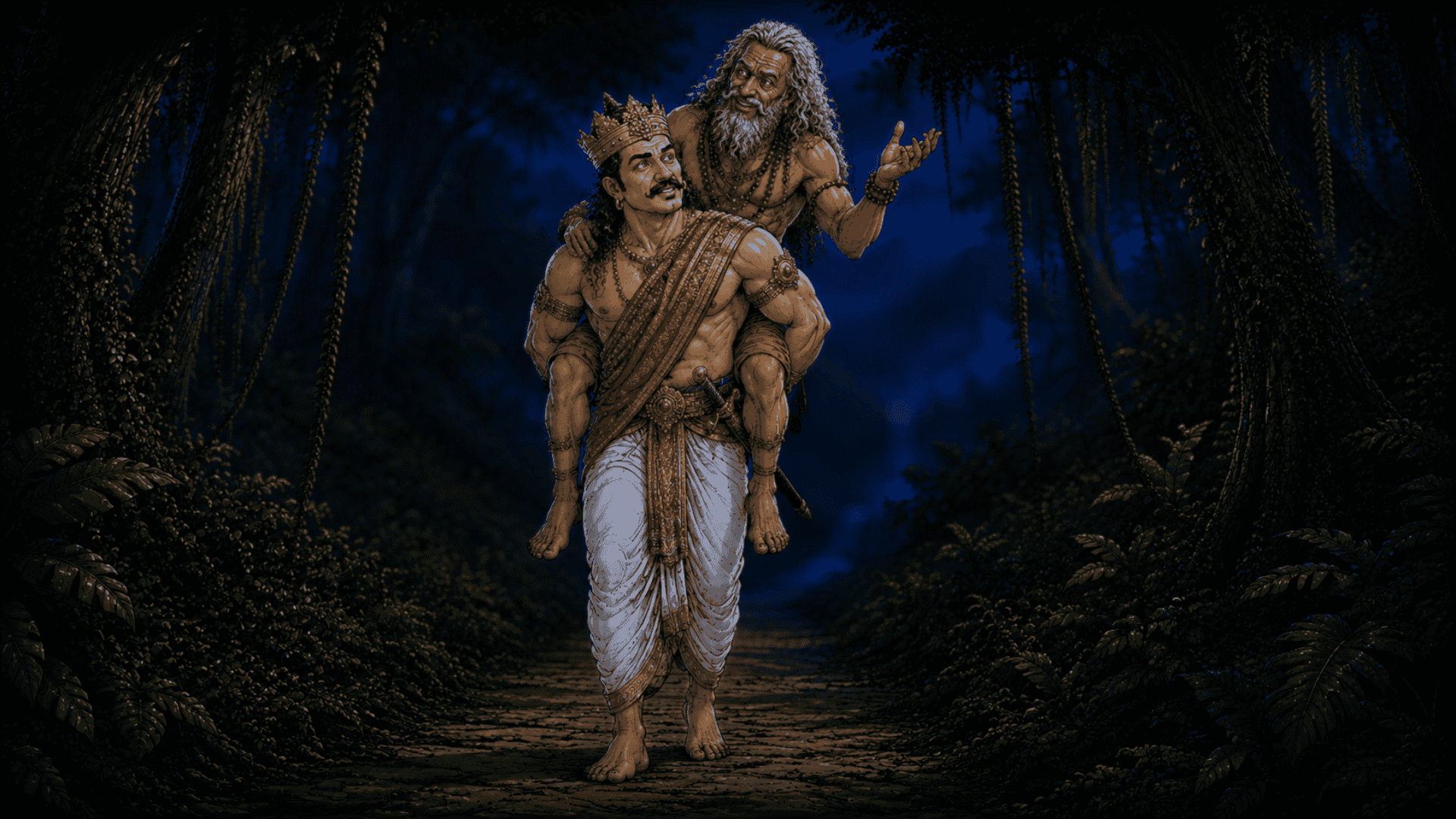
Answer me if you know. Keep silent, and your head will burst into a hundred pieces.
The table of contents
Eighteen stories on the road to the yogi
Every story follows the same walk.
- Vikrama lifts the Vetala down from the sissoo tree.
- The Vetala tells him a story on the way.
- He asks his question, and Vikrama answers.
- The Vetala flies back to his branch, and Vikrama turns around.
- The sissoo tree
- Story 01Introduction and the Story of Viravara
- Story 02Who Is More Generous?
- Story 03Three Sons and the Tortoise
- Story 04The Story of Somaprabha
- Story 05The Story of Prachandasimha
- Story 06The Story of Madanasundari
- Story 07The Story of Lavanyavati
- Story 08King Dharmadhvaja
- Story 09The Story of Somasharma
- Story 10The Story of Unmadayanti
- Story 11The Story of Harisvami
- Story 12The Story of Suryaprabha
- Story 13King Chandravaloka
- Story 14Four Brothers and a Tiger
- Story 15The Story of an Ascetic
- Story 16The Story of Jimutavahana
- Story 17The Final Puzzle
- Story 18Vikrama and the Vetala: The Final Encounter
- The yogi’s fire
For parents
Stories that end in a question
The Vetala-Pancha-vimshati is a fascinating collection of twenty-five stories from Sanskrit literature, featuring King Vikrama and the mysterious Vetala. Each story presents an extraordinary situation followed by a thought-provoking question that challenges wisdom, judgement, and reasoning.
Traditionally, these stories served not merely as entertainment but also as a way to cultivate intellectual and moral qualities, encouraging wisdom, sound judgement, and ethical conduct among kings and audiences.
They explore themes of loyalty, courage, sacrifice, and justice, often presenting complex ethical dilemmas. The origins of the Vetala-Pancha-vimshati narrative tradition can be traced back to at least the 11th century CE, when the tales appeared in Sanskrit literary collections such as Somadeva’s Katha-saritsagara and Kshemendra’s Brihat-kathamanjari.
This course, delivered by renowned Sanskrit scholar Dr Sucheta Paranjape, introduces eighteen selected stories from Jambhaladatta’s Vetala-Pancha-vimshati and explores their narratives, moral significance, and relevance to contemporary life.
While some traditional judgements may differ from modern perspectives, these stories continue to encourage critical thinking and ethical reflection.
As we explore these fascinating tales, one question remains:If you were King Vikrama, what would you say?
Conceptualised and curated by Dr. Gauri Moghe

Your storyteller
Dr. Sucheta Paranjpe
A gold medallist in science who chose Sanskrit, and a scholar who has never stopped telling its stories.
Dr. Paranjpe studied at Fergusson College, Pune, and holds a Ph.D. in Vedic Studies with a UGC fellowship. She has taught Sanskrit and Indology at Savitribai Phule Pune University and Tilak Maharashtra Vidyapeeth, and has been visiting faculty at Leipzig University in Germany. At the Bhandarkar Oriental Research Institute she contributed to the Cultural Index Project and the Infosys Academic Program.
Her lectures, writing and talks have brought the Vedas and Upanishads to audiences far beyond the classroom. On BharatVidya she also teaches the Rugveda and Vedakatha.
The course was conceptualised and curated by Dr. Gauri Moghe.
Made by BharatVidya with the Bhandarkar Oriental Research Institute, Pune. BORI has studied India’s texts since 1917 and keeps over 28,000 manuscripts. More than 46,000 learners in 45 countries have studied with BharatVidya; this is the first course made for their children.
Questions
Parents usually ask
Is it scary?
The Vetala is a ghost who lives in a cremation ground, so there is a little shiver. He is also funny, talkative and rather fond of the king. The stories are told for children aged 8 to 12.
Are these the original stories?
They come from Jambhaladatta’s Sanskrit Vetala Panchavimshati, a collection of twenty-five tales. Dr. Sucheta Paranjpe tells eighteen of them in language a child can follow, keeps each story’s question and the king’s answer, and explains the reasoning behind it.
Can my child watch alone?
Yes. Each story stands on its own and fits easily into one sitting. Watching together helps at the question, where most of the learning happens.
Which language is it in?
English.
Some of the king’s answers feel old-fashioned. Is that a problem?
These stories were told centuries ago, and a few of the traditional judgements differ from how we think today. Dr. Paranjpe says so plainly. Those are often the best moments to ask your child what they would have said.
Is the course self-paced?
Yes. Watch at your own pace, with lifetime access to all eighteen stories.
Keep reading
More from BharatVidya
For children
More courses for children are on the way. Tell us which stories your child would like to hear next. Write to us
For the grown-ups

18 Parvans of the Mahabharata
The whole epic, parvan by parvan, from BORI’s Critical Edition.
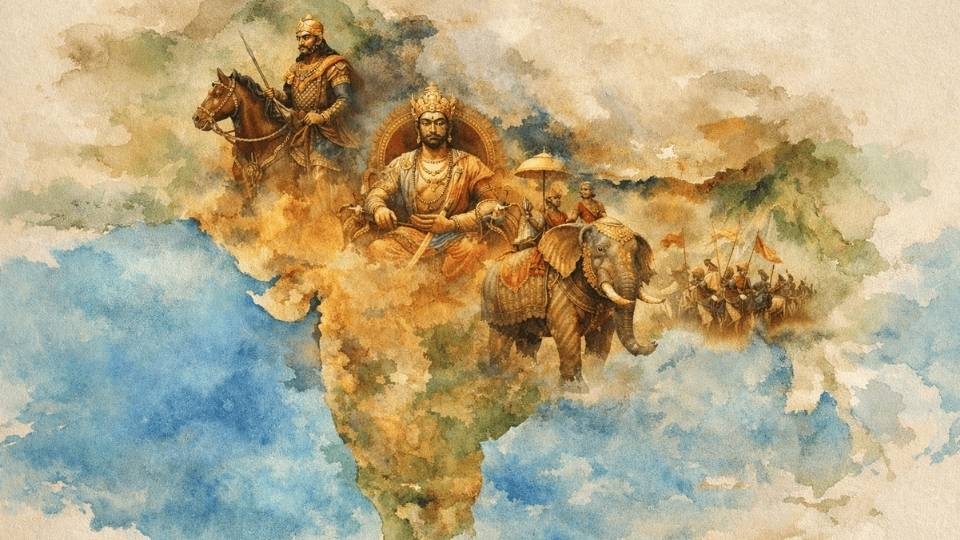
Ancient Indian Dynasties
The rulers of ancient India, and what each of them left behind.

Artha & Niti
Ancient Indian thinking on wealth, strategy and the state.

Timeless Temples
How India’s temples were imagined, built and read.
If you were King Vikrama, what would you say?
The Vetala is back on his tree with eighteen questions, waiting for someone who will answer them.
₹1,000
By clicking on Continue, I accept the Terms & Conditions,
Privacy Policy